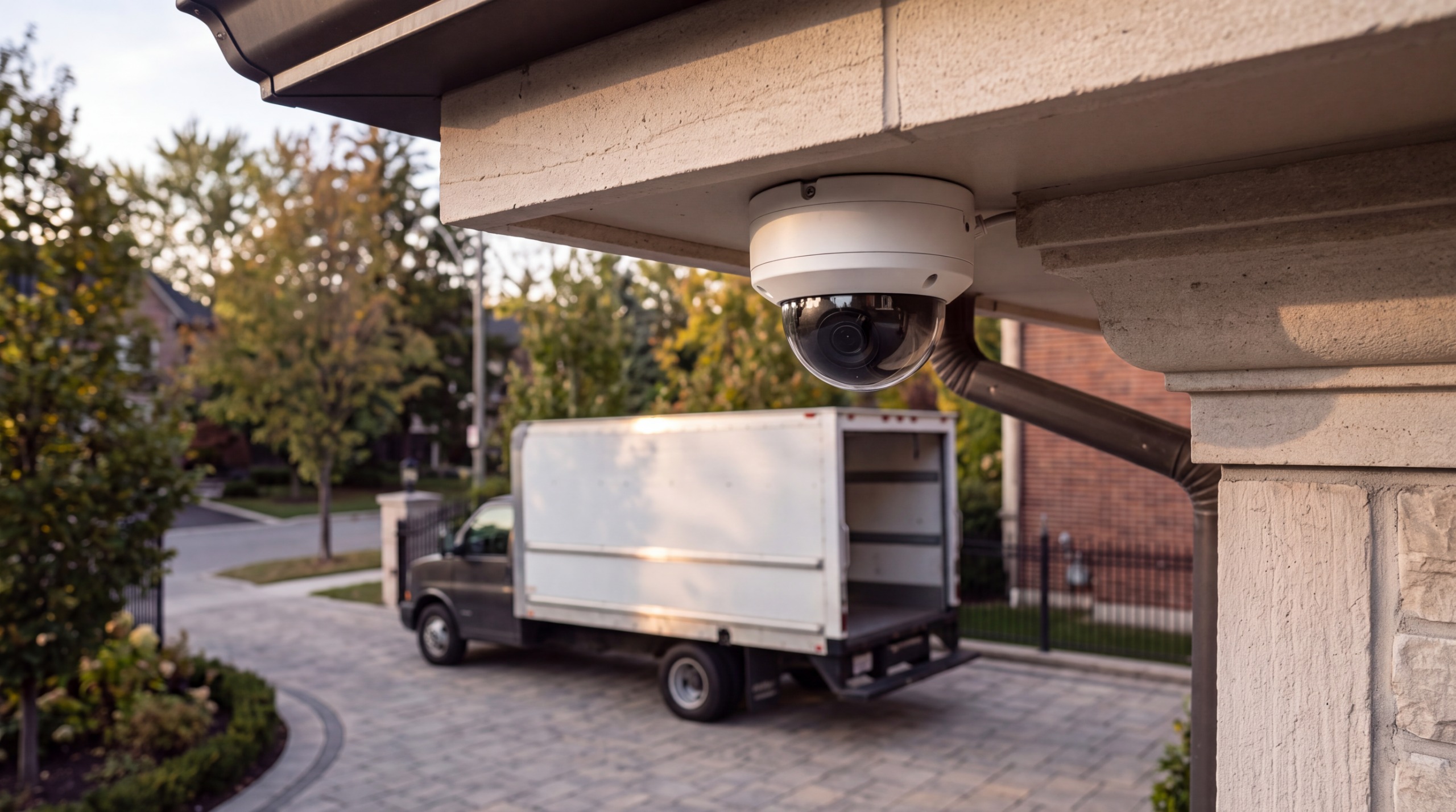
Buying a home in Rosedale, Forest Hill or a premium Toronto neighbourhood? Here are the 7 security systems and options to consider before you move in, and why doing it first is easier.
October 14, 2026
Just bought a home, or getting ready to move into a new one? Congratulations! Whether it is your first family home in Lawrence Park, a long-awaited move to Forest Hill, or a custom build in Bedford Park, this is a big and exciting chapter. It is also the best time to think about your home security.
Many OZINT clients contact us just before or shortly after they move into a new home. Our advice is always the same: if you can, start before move-in. That is when we can plan, install and test a professional security system properly, without working around boxes, furniture or a busy household.
The short answer: the best time to install a security system in a new home is before you move in, ideally between closing day and moving day. Below are the seven systems we recommend having in place from your first night, how each one works, and how they come together into one layered plan that protects your home, property and family.
The 7 systems at a glance:
Securing a home properly is a real project. It involves cameras, sensors, wiring, networking, locks, monitoring and response. Done after you move in, it means drilling through finished walls, scheduling around school runs and, with some providers, living with half-installed equipment until the job is complete.
Done before, it is far simpler:
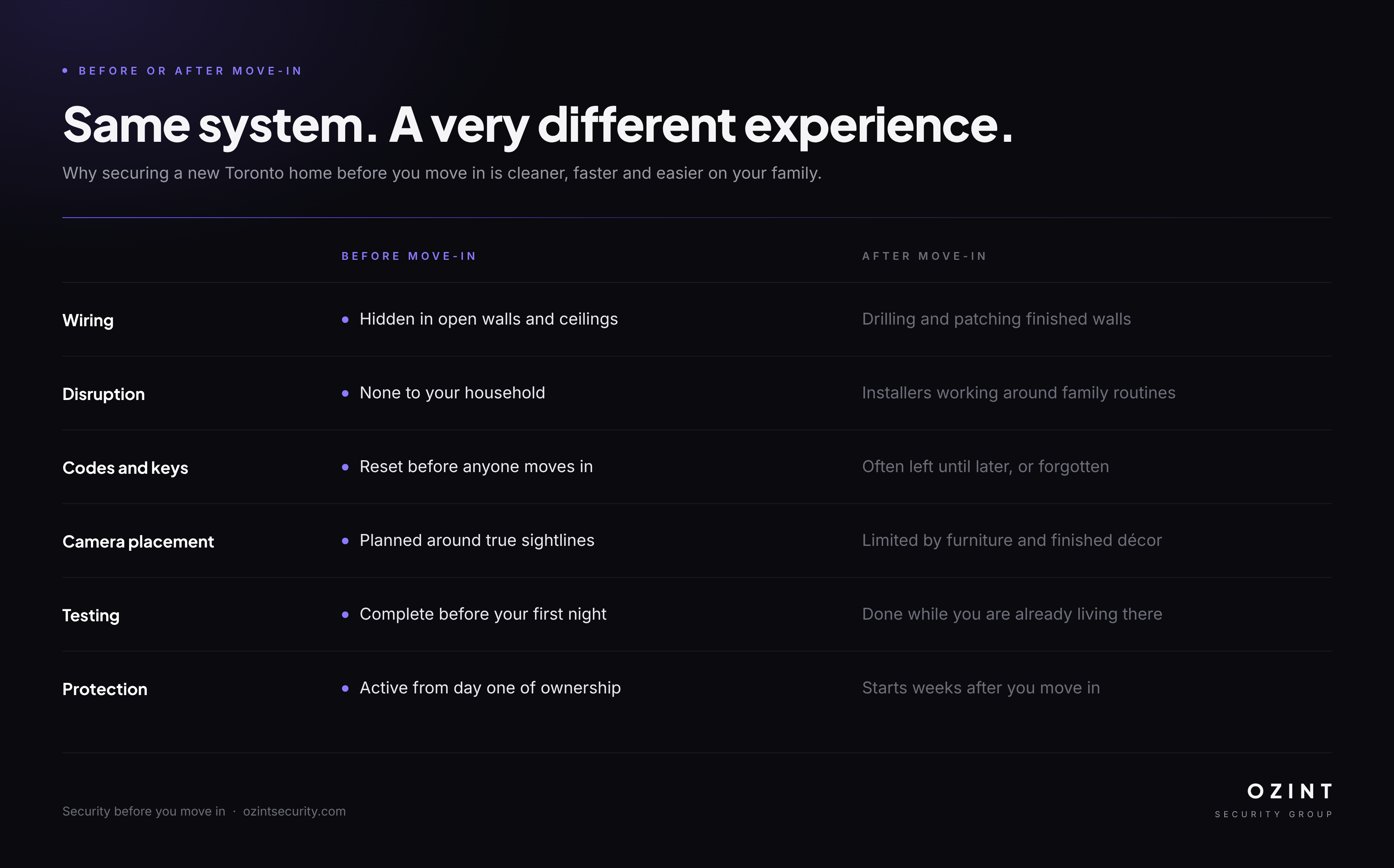
A new build is the ideal time to install a professional security system. During construction, cabling and conduit can go in before the drywall does, so every camera, sensor and keypad sits exactly where it should, with power and network planned in from the start. It also means the site itself can be monitored during construction, when materials, tools and an unoccupied property are most exposed. If you are building or doing a major renovation in neighbourhoods like Bedford Park, Forest Hill, or any of Toronto's premium areas, bring security into the plan at the design stage.
Not every homeowner thinks about security before moving day, and that's completely fine. Many OZINT clients come to us after they've settled in. We make it just as easy to bring professional-grade residential security into a home that is already built and lived in.
Retrofitting a finished home can sound complicated: cameras, wiring, sensors, a hub, an app and a monitoring provider, all fitted around your family's daily life. OZINT takes that off your plate. We handle every step from start to finish, so you never have to coordinate trades or work out the technology yourself.
How it works:
From the first call to the moment your home goes live with the Command Centre, OZINT keeps the whole process simple, seamless and stress-free.
How it works: Commercial-grade cameras record in high definition day and night, while built-in AI recognizes people and vehicles and filters out animals, shadows and swaying branches. When something deviates from baseline activity or is marked as suspicious, the alert goes to trained operators at the OZINT Command Centre, who see what is happening live and act on it.
Store-bought cameras record, send a notification to your phone and wait for you to notice. That is useful after the fact, but no one is watching in the moment. As we explain in From Surveillance to Intervention, a recording tells you what happened. Live monitoring helps change what happens next.
Professional AI-enabled CCTV closes that vulnerability gap. Clearer images, smarter alerts and human oversight mean fewer false alarms and faster, more confident decisions.
How it works: A security professional walks the property, maps every approach and positions cameras so their views overlap, with no blind spots in between. Each camera has a specific job, from capturing clear faces at the front door to watching the full length of the driveway.
Placement matters as much as the camera itself. A well-placed camera can identify a person and a licence plate. A poorly placed one may only capture a silhouette.
Areas worth covering:
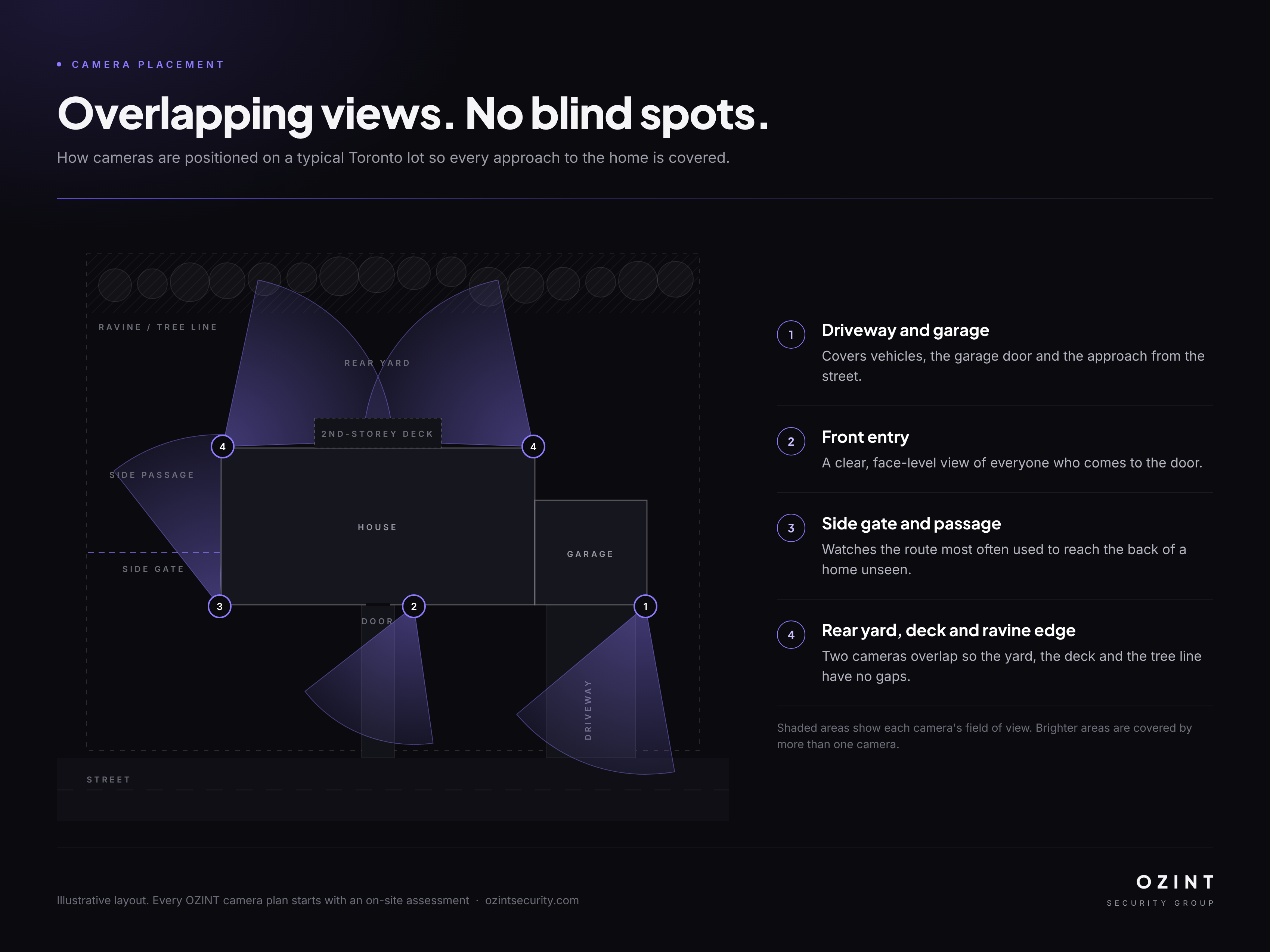
Common mistakes to avoid: cameras facing into direct sun or glare, cameras mounted low enough to be reached and moved, and views that point into a neighbour's windows.
Before move-in, an empty property shows its true sightlines, before landscaping, furniture and window coverings change the picture.
How it works: Sensors on doors, windows and interior spaces detect when something opens, moves or breaks, and trigger the alarm instantly. Outside, a loud siren and bright flood lights let anyone at the edge of the property know they have been seen, often before they reach a door.
This is your home's perimeter layer. Door and window contacts, motion detectors and glass-break sensors cover the inside, while lights and sound do their work outside. Together, they are built to stop an intrusion early, not just record it. Our article on the psychology of deterrence explains why visible, immediate responses work.
There is one important detail many homeowners miss. According to the Toronto Police Service, 97% of alarm activations reported to TPS have been identified as false, which is why police respond to burglar alarms only once they are verified, for example by video, audio or someone on scene. An alarm connected to live cameras and trained operators can be verified in moments. See the key differences between alarm monitoring and live patrol.
How it works: Fixed buttons in key rooms and wearable fobs let anyone in the household call for help with a single press, silently if needed. Each press goes straight to the OZINT Command Centre, where an operator responds right away.
Panic buttons are one of the simplest and most reassuring parts of a home security system. They help:
Typical placements include the primary bedroom, the kitchen and the front hall, with portable fobs for family members. Toronto police also treat panic alarms differently from burglar alarms: panic, hold-up and duress alarms are exempt from verification.
Installing them before move-in means buttons go where your family will actually spend time, and everyone learns how to use them on day one.
How it works: Smart locks, keypads and garage controllers let you decide who can enter, when and through which door, and you can see every entry from your phone. Each person gets their own code or credential, so access can be granted or removed in seconds.
A new home comes with an unknown history of keys, codes and remotes. Access control lets you start with a clean slate:
The garage deserves special attention. For many Toronto homeowners, it is where the most valuable vehicles live and a common entry point into the house. Our report on how thieves take cars out of Toronto driveways covers what actually stops them.
How it works: Your cameras, sensors, siren, lights, panic buttons and locks all connect to a single hub and one app, so every part of the system works together. That hub links directly to the OZINT Command Centre, giving operators one clear picture the moment something happens.
Many homes end up with a patchwork: a camera app, a separate alarm panel, a smart lock from another brand and no one tying it together. A central hub replaces that with one system. When a sensor trips, the right cameras are already in view. When a panic button is pressed, the operator sees exactly where.
Planned before move-in, the hub, network and backup power are set up once, properly, instead of patched together later. It can also integrate with your smart home, so security works with the rest of the house, not alongside it. And once it is installed, the equipment is yours.
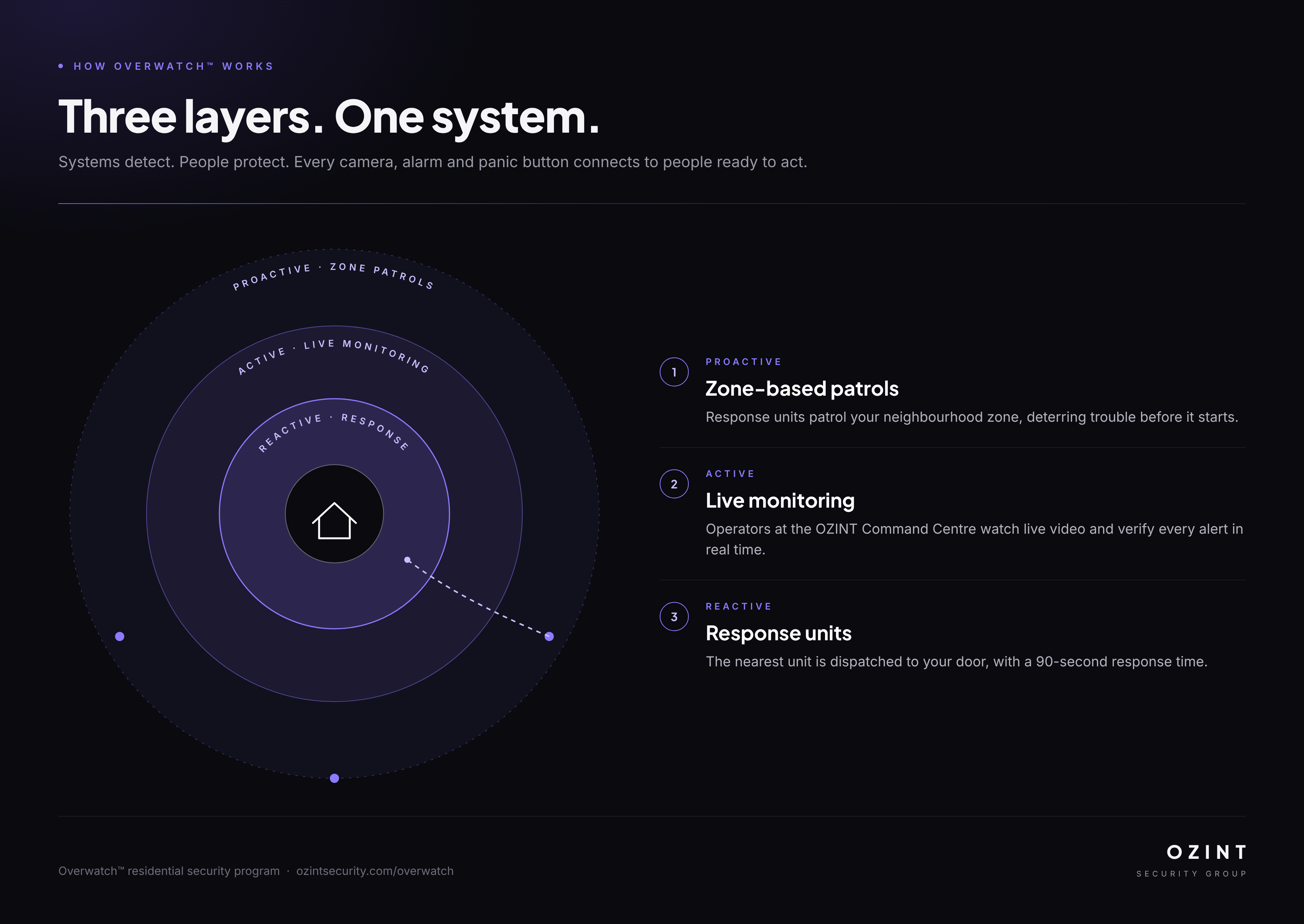
How it works: Response units patrol your neighbourhood zone, deterring trouble and staying close enough to reach your door quickly when an alert comes in. When an alarm, camera or panic button is triggered, operators verify it live and dispatch the nearest unit, with a 90-second response time.
This is the layer that ties everything together. Systems detect. People protect.
Through Overwatch™, OZINT's residential security program, every system above connects to a wider network of coverage across your neighbourhood. It works in three layers:
Toronto police response is improving. The Toronto Police Service's 2025 Chief's Annual Report puts the average Priority 1 response at 14.1 minutes, down 17.5% from the year before. Private response units do not replace police. They work alongside them, covering the first critical minutes on scene and coordinating with police when needed. You can see what happens minute by minute in The Anatomy of 90 Seconds, and why the proactive layer matters in proactive vs reactive home security.
There is a community benefit too. Each home that joins a zone strengthens patrol coverage for the whole street.
Every one of Toronto's finest neighbourhoods has its own character, and that shapes how a home should be secured.
Securing a new home on your own can mean coordinating camera installers, an alarm company, a locksmith, an electrician and a monitoring provider, all while managing a move. It is a lot, and it is easy for something to fall through the cracks.
OZINT handles it as one seamless project:
One team, one point of contact and one system that works together.
"The families we work with are already managing a hundred moving parts when they buy a new home. Security should not be one more headache after they move in. When we plan it before the keys change hands, the home is protected from the very first night, and the family can focus on making it theirs." - Zohar, Founder of OZINT Security Group
A new home should feel calm from the moment you walk in. With the right systems planned and installed before move-in, it can. You get cameras that see, alarms that are verified, buttons that reach a real person, and response units close by, all working together.
Closing soon or building new? Book a pre-move-in security briefing and we will help you put the right plan in place before you get the keys.
Ideally before you move in, between closing day and moving day. The home is empty, wiring can be hidden in open walls, codes and locks can be reset, and everything can be tested before your family arrives.
Yes, it is the best time. Cabling and conduit can be installed before drywall, so cameras, sensors and keypads go exactly where they should, and the site can be monitored during construction.
Yes. Previous owners, agents and contractors may still have keys, alarm codes or garage remotes. Resetting everything and moving to smart access control gives you a clean slate and a record of who comes and goes.
Yes, and it is often easier. Installers can work alongside other trades while walls are open, and the property can be monitored while it is unoccupied.
Alarm monitoring reacts when a sensor is triggered. Live video monitoring adds trained operators who see what is happening, verify it in real time and coordinate a response. Toronto police respond to burglar alarms only once they are verified, which is why live verification matters.
No. Private response units work alongside police. They provide fast on-scene presence and coordinate with police when needed. In any emergency, always call 911.


