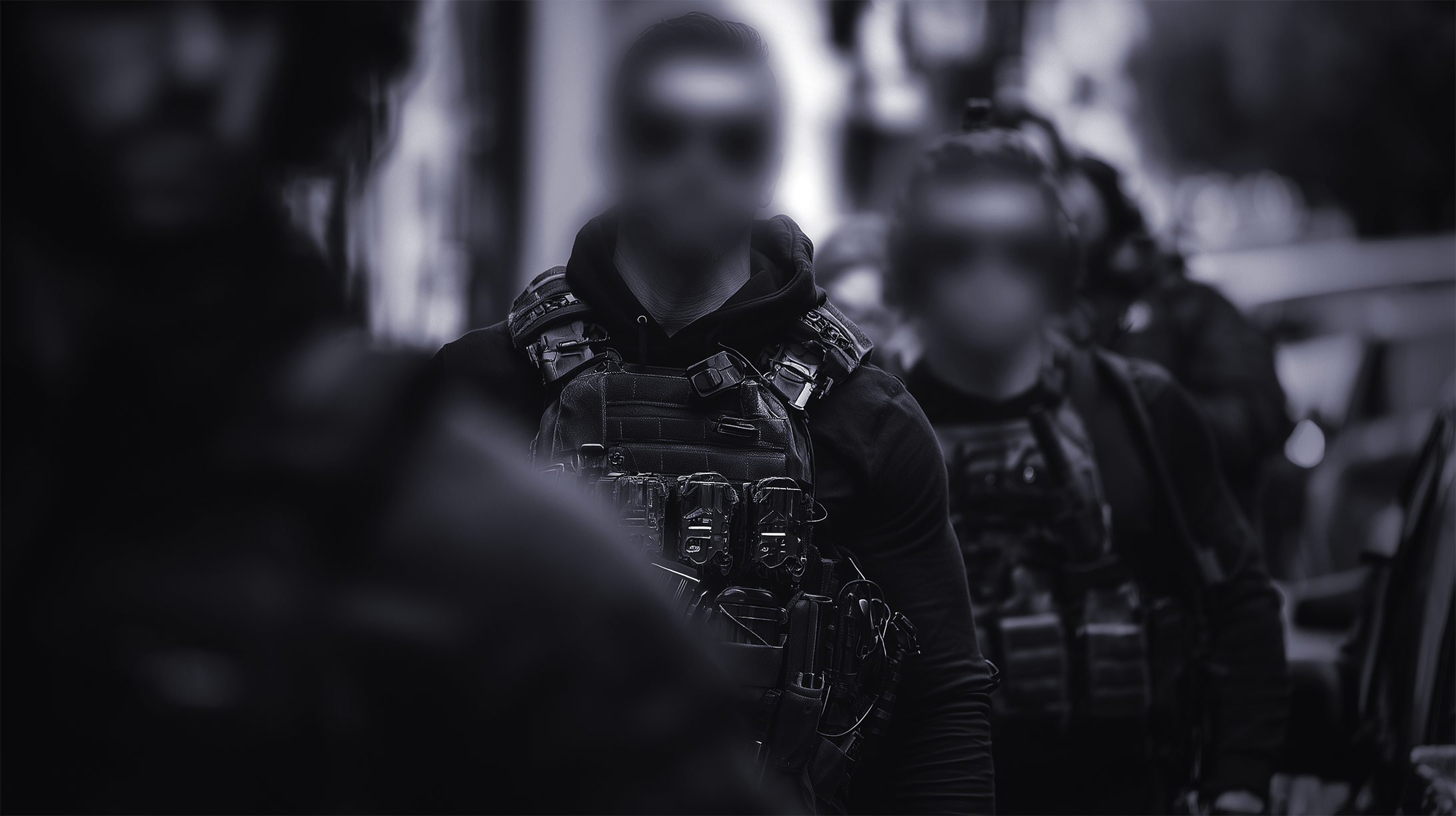
An exploration of how operational military experience translates into calmer judgment, faster decision-making, and more disciplined security operations in civilian environments.
November 17, 2025
The security industry is filled with professionals who claim military backgrounds. But not all military experience translates equally to civilian protection effectiveness. Understanding what military service actually contributes to security capability, and what it doesn't, helps clients evaluate security providers and helps security professionals leverage their backgrounds appropriately.
Military service, particularly in combat arms or special operations units, develops specific capabilities that prove invaluable in civilian security contexts. These aren't about weapons proficiency or physical toughness alone, they're about mindset, judgment, and operational discipline.
Composure Under Pressure: Perhaps the most valuable trait military experience develops is the ability to remain calm and functional when situations become chaotic, stressful, or dangerous. In military operations, especially combat, personnel face extreme stress regularly. Over time and with proper training, they develop stress inoculation, the physiological stress response remains, but it no longer impairs cognitive function or decision-making.
This composure translates directly to civilian security. When security incidents occur, an intruder detected, a medical emergency, a potential threat, military-experienced security professionals typically respond with calm, methodical effectiveness rather than panic or paralysis. They've been stressed before, more severely than most civilian security situations will ever stress them, and they know they can function effectively despite stress.
Rapid Decision-Making: Military operations often require split-second decisions with incomplete information and significant consequences. This environment trains decision-making under time pressure and uncertainty. Personnel learn to gather available information quickly, assess options rapidly, make decisions decisively, and adapt as situations evolve.
In civilian security, this decision-making speed matters enormously. The difference between a threat intercepted and a threat succeeding often comes down to seconds. Security personnel who can rapidly assess situations and decide on appropriate responses provide significantly better protection than those who hesitate or require extensive deliberation before acting.
Operational Discipline: Military service instills discipline, following procedures even when they're inconvenient, maintaining standards even when unsupervised, and adhering to protocols even under pressure. This discipline ensures consistent performance rather than performance that varies based on mood, circumstances, or oversight presence.
For clients, this discipline means security measures are actually implemented as designed rather than shortcuts taken when personnel think no one is watching. It means protocols are followed during the boring 99% of time when nothing happens, so they're ingrained when the critical 1% arrives.
Mission Focus: Military training emphasizes mission accomplishment over personal comfort or convenience. Personnel learn to prioritize objective achievement above fatigue, discomfort, or personal preference. This mission focus translates to civilian security as client-centric rather than personnel-centric operations.
Security professionals with military backgrounds typically understand that their job is protecting clients, not making themselves comfortable. They maintain vigilance during long, boring shifts. They respond at inconvenient hours without complaint. They prioritize client security needs over their own convenience.
Teamwork and Coordination: Modern military operations are fundamentally team efforts requiring close coordination between multiple personnel. Military training develops the ability to work as part of coordinated teams, communicate effectively under pressure, support teammates while maintaining individual responsibilities, and trust teammates to perform their roles.
This teamwork capability is essential for comprehensive security operations where multiple security elements must coordinate. A security operations center must coordinate with field response teams. Close protection details must work as synchronized units. Event security requires coordination between numerous personnel in different roles.
While all military experience provides value, certain military backgrounds offer particularly relevant preparation for high-end civilian security. Israeli Defence Forces (IDF) experience, especially from elite units, provides unique advantages.
High-Threat Environment Experience: Israel faces persistent security challenges that keep military forces operationally engaged far more than most militaries. IDF personnel, especially in combat units and special operations, gain extensive real operational experience rather than just training. They've applied their training in actual high-threat situations repeatedly throughout their service.
This operational experience creates judgment that training alone cannot provide. They've seen how plans work (or don't work) in reality. They've encountered unexpected situations and had to adapt. They've experienced the difference between classroom theory and field reality.
Asymmetric Threat Focus: Israeli security forces have developed extensive expertise addressing asymmetric threats, adversaries who don't follow conventional military patterns but use terrorism, guerrilla tactics, and urban operations. These asymmetric threat methodologies are closely related to threats civilians face: criminals, stalkers, terrorists, and other adversaries who operate outside conventional frameworks.
IDF training and operational experience in addressing these asymmetric threats translates directly to civilian protection where adversaries similarly don't follow predictable conventional patterns.
Close-Quarters and Urban Expertise: Much of Israeli military operation occurs in urban environments and close-quarters situations. IDF units have developed sophisticated expertise in urban operations, building searches and clearance, close-quarters combat, and operating in civilian-populated areas where collateral damage must be minimized.
These urban and close-quarters capabilities are directly applicable to residential security, corporate facility protection, and close protection operations in urban environments like Toronto.
Intelligence Integration: Israeli military culture deeply integrates intelligence into operations. Even tactical-level personnel understand and use intelligence rather than intelligence being a separate function disconnected from operations. This intelligence-led approach creates security professionals who naturally think in terms of threat assessment, pattern analysis, and intelligence-informed planning rather than purely reactive security.
Continuous Readiness Mindset: Israel's security environment requires constant readiness. IDF units maintain higher readiness levels than most militaries because threats can materialize with minimal warning. This creates a mindset where readiness is continuous rather than something activated when specific threats emerge.
For civilian security, this translates to security professionals who maintain appropriate vigilance continuously rather than becoming complacent during quiet periods.
While military experience provides valuable foundation, it doesn't automatically create excellent civilian security professionals. Several factors determine whether military experience translates to civilian security effectiveness.
Adaptability to Civilian Context: Military operations occur in very different legal, ethical, and operational contexts than civilian security. Rules of engagement differ dramatically. Legal authorities are different. Cultural expectations vary significantly. Military veterans who cannot adapt their mindset and approach to civilian contexts struggle in private security despite strong military backgrounds.
The best military veterans in civilian security understand that their military experience is foundation, not blueprint. They adapt military-developed capabilities to civilian contexts rather than trying to apply military methods directly.
Type and Quality of Military Service: Not all military service is equally relevant. A logistics specialist who served in a rear-area support role will have developed some valuable traits (discipline, teamwork) but lacks the operational experience and tactical skills of infantry or special operations personnel. Similarly, service in low-intensity peacetime environments develops different capabilities than service in combat zones or high-operational-tempo units.
When evaluating military backgrounds, the specific unit, role, and operational experience matter enormously. Special operations backgrounds typically provide more directly relevant experience than conventional roles. Combat veteran status indicates exposure to high-stress operational environments. Elite unit service suggests personnel met rigorous selection standards and received extensive advanced training.
Continuous Development: Military experience provides excellent foundation, but capabilities must be maintained and developed continuously. A veteran who served ten years ago but hasn't maintained fitness, hasn't trained in tactical skills, and hasn't updated their knowledge brings their experience but not current capabilities.
Elite security operations require continuous training and skill maintenance. Military background is valuable starting point, but current capabilities matter more than past service.
Personality and Professionalism: Military service develops certain capabilities, but it doesn't change fundamental personality. Some veterans possess the professional demeanor, communication skills, and judgment needed for high-end civilian security. Others, despite strong military backgrounds, lack the interpersonal skills or professional presentation clients expect.
Military experience indicates certain capabilities, but personnel selection must also assess whether individuals can represent security providers professionally in client interactions.
The most effective military veterans in civilian security consciously translate their military-developed capabilities to civilian contexts.
Threat Assessment Translation: Military threat assessment skills, analyzing adversary capabilities, assessing likely courses of action, and identifying vulnerabilities—translate directly to civilian security threat assessment. But the threats differ. Instead of military adversaries, civilian security addresses criminals, stalkers, protesters, or corporate espionage. Effective military veterans learn civilian threat profiles while applying military-developed analytical frameworks.
Tactical Translation: Military tactical skills—movement, positioning, observation, coordination, form the foundation for civilian security tactics. But tactics must adapt to civilian legal constraints, client lifestyle requirements, and urban environments different from military operational areas. Veterans who understand this adapt their tactical knowledge appropriately rather than attempting direct military tactical application.
Leadership Translation: Military leadership experience develops the ability to lead teams, make decisions under pressure, and maintain standards. These capabilities translate to civilian security leadership. But civilian security involves different stakeholder management, client interaction, and organizational dynamics than military command structures. Effective veterans adapt their leadership style to civilian contexts.
Communication Translation: Military communication emphasizes clarity, brevity, and effectiveness under pressure. These communication skills provide excellent foundation for security operations. But civilian security also requires client communication, conflict de-escalation, and professional interaction skills that military service may not have developed extensively. Veterans must develop these complementary communication capabilities.
At OZINT Security, our operational leadership and many of our security professionals come from Israeli Defence Forces elite units. This military heritage shapes our organizational culture and operational standards in specific ways.
Operational Excellence Standards: Our IDF background creates expectation that operations are planned thoroughly, executed precisely, and reviewed systematically. This operational excellence mindset infuses everything from simple residential patrols to complex event security operations.
Intelligence-Led Operations: Following Israeli military culture, we deeply integrate intelligence into all security operations. Our security personnel don't just respond to incidents—they understand threat landscapes, analyze patterns, and position themselves based on predictive intelligence. This intelligence-led approach is natural for personnel from IDF backgrounds where intelligence integration is fundamental.
Continuous Training Culture: IDF units train constantly and intensively. This training culture carries into OZINT operations where training is continuous and realistic rather than occasional and perfunctory. Our personnel expect to train regularly because that's the culture they came from.
Mission-Focused Mindset: Israeli military culture emphasizes mission accomplishment and operational effectiveness over bureaucratic compliance or personal comfort. This translates to client-focused security where client protection comes first and administrative convenience second.
Adaptive Problem-Solving: Israeli military forces operate in complex, rapidly changing environments requiring constant adaptation. This creates personnel who excel at adapting to unexpected situations, solving problems creatively, and maintaining effectiveness despite circumstances not matching plans.
For clients, security teams with relevant military backgrounds provide several concrete advantages.
Proven Performance Under Pressure: Military veterans, especially combat veterans, have already proven they can function effectively under extreme stress. Clients can have confidence that when security situations become intense, their security team won't freeze, panic, or fail to perform.
Disciplined Consistency: Military-instilled discipline means security measures are implemented consistently rather than performance varying based on mood or circumstances. Clients get reliable, consistent security rather than performance that depends on whether personnel feel like maintaining standards.
Tactical Competence: Military tactical training provides security personnel with capabilities that matter if situations escalate to physical confrontation. Clients facing potential physical threats benefit from security teams who possess genuine tactical skills, not just theoretical training.
Operational Experience: Veterans bring experience from actual operational situations, not just classroom training. They've dealt with unexpected developments, made decisions with incomplete information, and managed real consequences of their choices. This experience creates judgment and confidence that training alone cannot provide.
Team Coordination: Military team experience means security details work as coordinated units rather than individuals who happen to be assigned together. This coordination significantly improves effectiveness during complex situations requiring multi-person response.
While military experience provides significant advantages, clients should understand its limitations and what additional factors matter.
Not a Substitute for Specialized Security Training: Military experience provides foundation, but civilian security work requires specialized training in civilian legal frameworks, client service and communication, residential and corporate security specifics, and local law enforcement coordination.
The best military veterans in civilian security have supplemented their military backgrounds with professional civilian security training rather than relying solely on military experience.
Recent Experience Matters: Military service from 20 years ago, even elite service, is less valuable than more recent experience if skills haven't been maintained. When evaluating security providers, consider both military background and recent training and experience.
Service Branch and Role Specifics: All military service develops some valuable traits, but combat arms and special operations backgrounds are most relevant to security work. Support roles, technical specialties, or non-combat service provide less directly applicable experience.
Individual Quality Variation: Military service indicates certain baseline capabilities, but individual quality still varies significantly. Selection standards, unit quality, operational experience intensity, and individual aptitude all create variation among military veterans.
Professional security providers with military-focused recruiting carefully screen candidates rather than assuming any military background automatically qualifies someone for security work.
Military experience, particularly from elite units and combat roles, provides legitimate competitive advantages in civilian security. The composure, decision-making ability, tactical skills, and operational discipline military service develops translate directly to security effectiveness. For clients, security teams with relevant military backgrounds offer proven capabilities and performance under pressure.
However, military experience is foundation, not complete qualification. The best military veterans in civilian security have adapted their military-developed capabilities to civilian contexts, maintained their skills through continuous training, and developed civilian security specialization beyond their military backgrounds.
For Toronto clients evaluating security providers, military backgrounds of key personnel matter—but so does how those backgrounds have been maintained, adapted, and supplemented. Ask about specific military backgrounds (which units, what roles, what operational experience), how long ago service occurred, what training has been completed since military service, and how military experience has been adapted to civilian security contexts.
At OZINT Security, our Israeli Defense Forces heritage is core to our identity and operational capabilities. But we've consciously translated military excellence into civilian security context, supplemented military backgrounds with specialized civilian training, maintained capabilities through continuous professional development, and built organizational systems that deliver military-quality operations in client-appropriate ways.
Because the value of military experience isn't just about having served—it's about bringing military-developed excellence to civilian protection in ways that genuinely enhance client security.


